HomeMulching vs. Clearing

KNOW YOUR OPTIONS

Forestry mulching vs.
land clearing.

Two approaches. One experienced team.

The right choice starts with what you want to do with your land. T3 Land Solutions handles both forestry mulching and land clearing in South Mississippi, serving Jackson and George counties and parts of Harrison County. We’ll guide you from the first questions to a clear plan for your property.

Forestry mulching is a type of land clearing. In this guide, “land clearing” means tree removal with stump and root excavation and debris handling where included in the scope.

REAL T3 RESULTS

Start with the finish you need.

These examples from two different T3 projects show how the finished surface can look.

01

RECLAIM & MAINTAIN

Forestry mulching
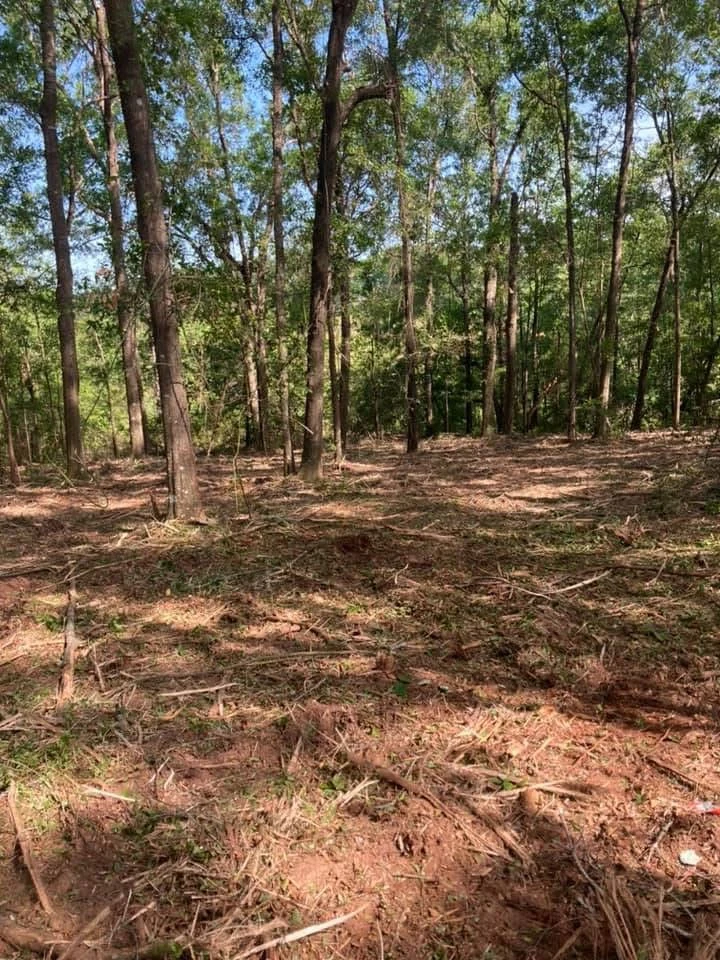
T3 forestry-mulching result: shredded vegetation covers the woodland floor between standing trees.
A mulched woodland floor with vegetation processed on site.

A mulcher cuts and shreds suitable brush, saplings, and tree material. The mulch stays on the surface; roots generally remain below ground.

Good fit for: overgrown property, trails, shooting lanes, selective thinning, and improved access. Food-plot or lawn preparation may need extra work.

Pros

  • Often less soil disturbance than excavation.
  • Usually avoids hauling or burning the mulched vegetation.
  • Can open up selected areas while keeping chosen trees.

Cons & limits

  • Roots and some stump material remain; regrowth is possible.
  • The ground can still be uneven, with a layer of wood chips.
  • Additional work is needed for building pads or prepared driveways.
02

CLEAR & PREPARE

Land clearing

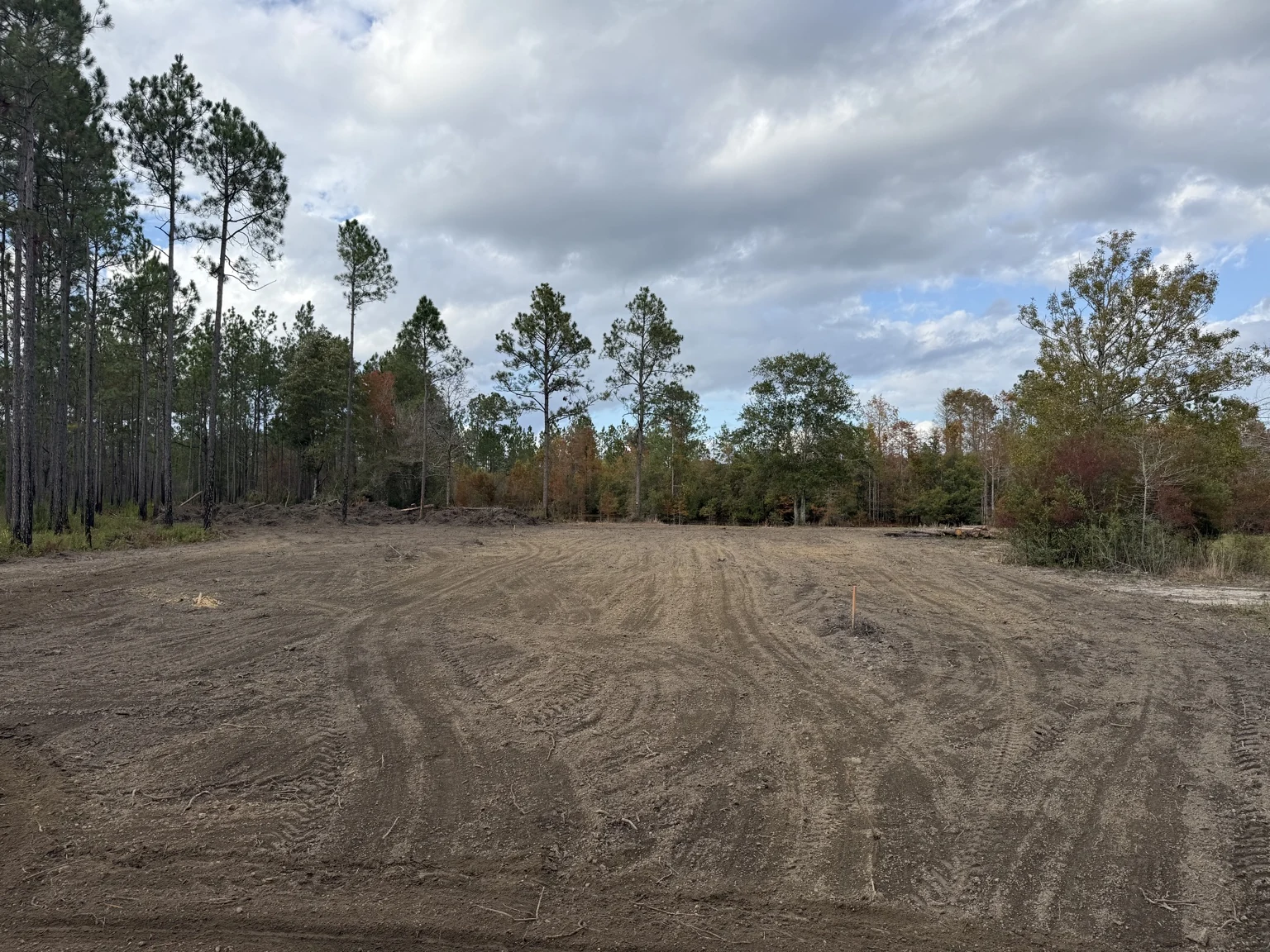
T3 land-clearing result: a broad open area of exposed soil, equipment tracks, and a surrounding tree line.
Open ground after clearing. Below-ground work and the final finish depend on the agreed scope.

Trees, brush, and other vegetation are removed from the agreed area. Stump and root excavation (called grubbing) and debris handling can be included to prepare the area for the next stage.

Good fit for: building footprints, new driveways, major property changes, and areas that need excavation. Grading and pad preparation are defined in the quote.

Pros

  • Allows stump and root removal where the project needs it.
  • Handles larger trees and substantial site changes.
  • Creates access for grading and further ground preparation.

Cons & limits

  • More excavation, handling, and equipment can increase cost.
  • Debris needs an agreed disposal or processing plan.
  • Disturbed ground may need backfill, compaction, and erosion control.

THE DIFFERENCES THAT MATTER

Compare the whole job.

Forestry mulching compared with land clearing and grubbing
What to compareForestry mulchingLand clearing & grubbing
Main goalOpen up overgrown land by shredding suitable vegetation in place.Remove vegetation and, when included, excavate stumps and roots for the next phase of work.
Stumps & rootsRoots generally remain. Reducing a stump at the surface is different from excavating it.Stumps and roots are excavated where the agreed scope calls for grubbing.
Material left behindA layer of wood chips and shredded vegetation stays on the ground.Tree and brush debris is handled through the agreed plan for haul-off, processing, or permitted on-site disposal.
Ground disturbanceUsually less soil disturbance than uprooting trees and excavating stumps.More soil disturbance; backfilling, drainage, and erosion-control work may be needed.
Construction useUseful for initial access or surrounding areas. Mulching alone does not prepare a finished building pad.The usual starting point for building footprints and driveways that need stump and root removal. Ground preparation follows.
Overall costOften a lower-cost option for vegetation management when debris can stay on site.Usually more involved when excavation, debris removal, and ground preparation are required. Compare the finished scope.

PLANNING TO BUILD?

Looking clear is only the first step.

Mulch, buried wood, and roots do not belong in structural fill. Organic material can decay and contribute to settlement. The ground beneath a building pad or driveway must be prepared for its intended use.

T3 will help define the clearing and site-work scope around your plans. The project plans and soil conditions determine how the pad must be prepared. Any required testing helps verify that the work meets the project specifications.

Why removing organic material matters — FHWA ↗
  1. 01

    Define the footprint.

    Agree on the building, driveway, and work areas, along with trees to preserve.

  2. 02

    Clear, grub & handle debris.

    Remove vegetation, excavate specified stumps and roots, and manage the material.

  3. 03

    Prepare the ground.

    Remove unsuitable organic material and address grading and drainage as specified.

  4. 04

    Complete the required pad work.

    Where fill is required, place and compact suitable material to the project specifications. Complete any required testing.

UNDERSTANDING OVERALL COST

Price the result.
Then choose the method.

Two quotes for the same acreage can cover very different work. T3 explains the included scope so you can compare what you’ll actually receive.

FOR ACCESS & BRUSH MANAGEMENT

Mulching can reduce handling.

Processing vegetation in place can avoid hauling, disposal, and additional equipment steps. That often makes it a practical lower-cost choice when a mulched surface meets your goal.

FOR CONSTRUCTION

Plan for the complete footprint.

Clearing and grubbing cost more when the job includes excavation and debris removal. Mulching an area first and then returning to excavate roots and remove mulch can add handling. The right sequence matters.

What changes your project price?

  • Tree size, species, and vegetation density
  • Stump/root removal and the finish you need
  • Terrain, wet ground, access, and obstacles
  • Haul-off, processing, or permitted on-site disposal
  • Grading, drainage, fill, and compaction
  • Equipment needs, travel, and mobilization

No single per-acre rate fits every property. Your quote identifies the work, disposal plan, and next steps.

EQUIPMENT WITH A PURPOSE

Different tools.
The right sequence.

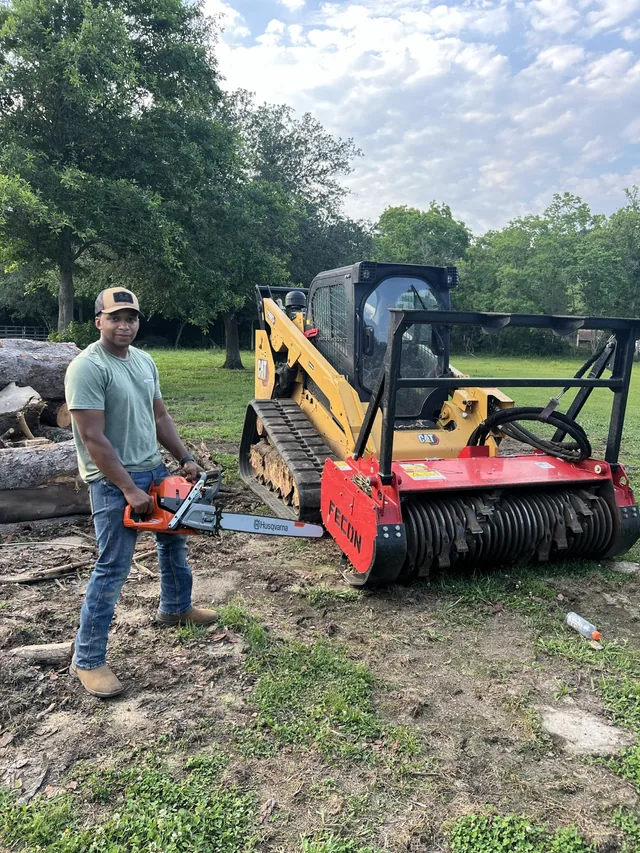
T3’s track loader, forestry mulcher, and excavator handle different stages of the work. We match equipment and attachments to your property, bringing in additional equipment when the scope calls for it.

T3 compact track loader with a forestry mulcher attachment on a work site.
Shred vegetation. Track loader with forestry mulcher.
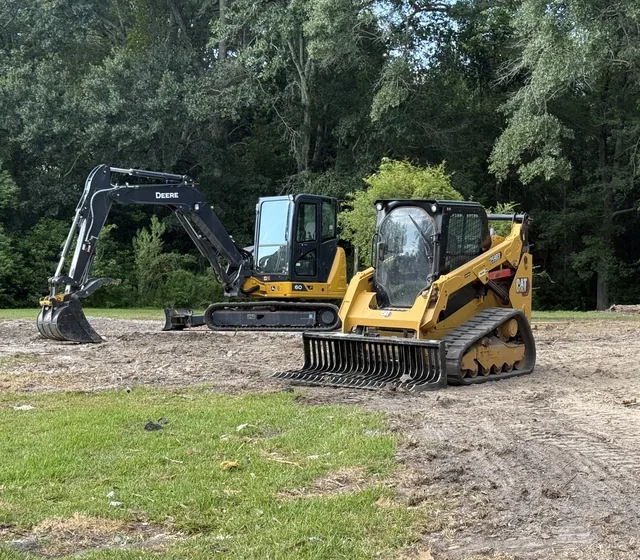
T3 excavator and compact track loader with a rake attachment on a cleared property.
Excavate & handle material. Excavator and track loader.
01

Track loader + forestry mulcher

A rotating cutting head shreds suitable brush, saplings, and tree material into mulch. It is well suited to reclaiming overgrown land and working around selected trees.

02

Excavator + bucket or thumb

An excavator removes trees, digs out stumps and roots, and moves material. This is a key tool when the work needs to go below the surface.

03

Loader + grapple, rake, or bucket

A loader gathers logs and brush, separates debris, loads material, and handles dirt. Attachments change with each stage of the job.

04

Dozer & grading equipment

Dozers and grading equipment move material and shape larger work areas when the scope and ground conditions call for them. Grading is a separate task from shredding vegetation.

05

Hauling & compaction equipment

Trucks or trailers move debris and fill; rollers or compactors compact placed material to meet the project requirements. We select this equipment when the job needs it.

06

Brush cutter & stump grinder

A cutter handles lighter vegetation; a grinder reduces the stump body but generally leaves roots. Neither replaces root excavation beneath a planned building area.

COMMON QUESTIONS

A clearer starting point.

Can I build directly on a mulched area?

Mulching alone does not complete construction preparation. Preparing a building footprint usually involves removing stumps, roots, mulch, and unsuitable organic material and then completing the required grading, drainage, fill placement, and compaction. T3 plans the clearing around the intended use and your builder’s requirements.

Is forestry mulching always cheaper?

It often costs less for brush management because material is processed in place. Large trees, heavy growth, difficult access, or a later need to excavate roots and remove mulch can change the comparison. We recommend the method that fits the final result you need.

Will brush grow back after mulching?

Some plants can resprout from surviving roots or return from seed. Mulching opens up the property, but it does not guarantee that vegetation will not grow back. We can discuss a maintenance plan suited to your goals.

Do I have to clear every tree on the property?

No. We agree on the work area and the trees you want to keep. A construction footprint may need full clearing and grubbing while the rest of the property receives selective clearing or mulching.

What if I’m not sure which service I need?

Send T3 your property location, photos, and plans for the land. We will review the conditions, recommend mulching, clearing, or a combination, and explain what is included in your project quote.

T3 HANDLES BOTH

You bring the goal.
We’ll guide the work.

Send your location, photos, and plans for the property. We’ll help you choose mulching, land clearing, or a combination, explain the scope, and prepare a project quote.

Request a quote

We aim to reply by text or email within 2 business days.

Learn more about the methods

For general background, see USDA Forest Service: mulching equipment, site conditions, and treatment costs; Caterpillar: forestry mulcher applications; and FHWA: clearing, grubbing, and ground preparation. Recommendations and construction requirements are specific to your site.